
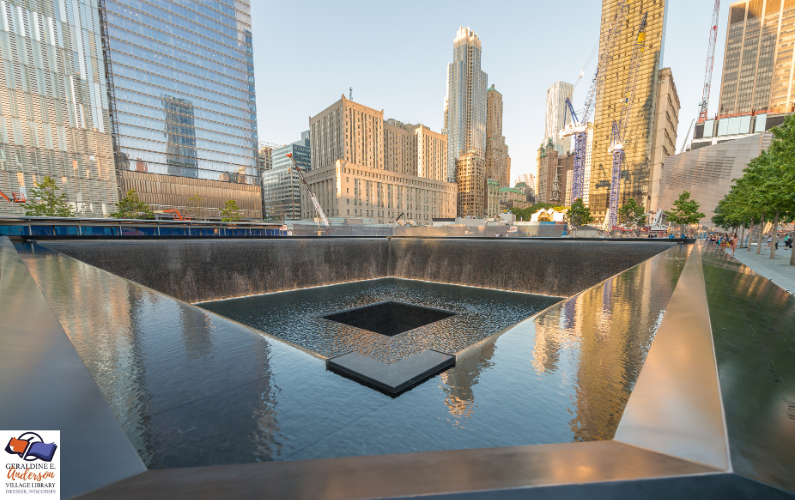
“We need to think about what stories need to survive this [9/11] and intentionally see that those stories survive.” — Kathleen D. Roe, retired chief of archival services, New York State Archives
Twenty-four years ago, the world watched in shock as the events of September 11, 2001, unfolded. Planes crashed, skyscrapers fell, over 3,000 lives were lost, and families and communities were forever changed. The damage was immense, altering not only lives but also national security, defense, and civil liberties.
Among the lesser-known losses were 21 libraries inside the World Trade Center; nonprofit, corporate, and legal libraries disappeared in an instant. Just two weeks later, librarians like Kathleen D. Roe began the painstaking work of documenting and preserving stories and evidence for history. Brewster Kahle of the Internet Archive created a digital repository of TV broadcasts to ensure the world could revisit how those days were seen and understood.
Far from New York, libraries also played a vital role. In Gander, Newfoundland, a town of 10,000 welcomed 6,500 passengers stranded after U.S. airspace closed. The local library became a hub—extending hours, offering free long-distance calls, and providing computers so families could connect with loved ones. For nearly a week, the library was not just a building but a lifeline.
As we remember the lives lost and honor first responders, let us also remember the quiet but powerful role libraries played: preserving truth, connecting people, and offering refuge in times of chaos. Support your library. Get your free library card—because in crisis and in calm, the library is here to help.
“Libraries are as important as schools and hospitals.” — Andrew Carnegie